-
 No to Coal-fired Power Plant in La Union, the Surfing Capital of the North!La Union is under threat: the construction of a 670-megawatt coal-fired power plant (CFPP) is expected to commence this year, in the historic town of Luna, which is known for its natural geophysical and cultural assets of high ecological, livelihood and touristic value. Within the 2 to 30 aerial-kilometer radius of the proposed coal-fired plant are the towns of Balaoan, known for its bountiful corn harvests and biodiverse coral gardens; of San Juan and Bacnotan, the main surfing areas; and of San Gabriel, home to Tangadan Falls (the most popular falls in Northwest Luzon) and Lon-oy Springs (a major water supply source of the City of San Fernando and suburbs). All of these will be degraded and eventually destroyed once the CFPP starts spewing toxic chemicals. Moreover, the water heated by the plant’s cooling system will blanch and damage supersensitive corals within the Darigayos Cove, known for its rich marine ecosystem (the source of livelihood of thousands of fisherfolks) and heritage structures along its white beach. We APPEAL to President Rodrigo Duterte, DENR Secretary Roy Cimatu, DOT Secretary Bernadette Romulo-Puyat, Sen. Cynthia Villar (Environment Committee), Sen. Sherwin Gatchalian (Energy Committee), DA Secretary Manny Pinol, Congressman Pablo Ortega, Congresswoman Sandra Eriguel, Governor Francisco Emmanuel Ortega III, Vice Gov. Aureo Nisce, Mayor Victor Marron and Vice Mayor Romeo Resureccion to: 1. Deny GLEDC’s application for an environmental compliance certificate (ECC) including other permits to construct and operate the CFPP. The proponents used deceit, bribery and strong-arm tactics to suppress opposition to their plan and did not fully comply with the required ECC processes as it only consulted residents in the five (5) barangays in and around the proposed 41-hectare site and excluded/ignored other towns and barangays within the plant’s immediate impact area as shown by the NO2 modelling exercise done by its own environmental consultants. Likewise, the Environmental Impact Assessment done by GLEDC’s consultants was also found to be technically deficient and misleading by other technical experts. 2. Pursue an alternative development agenda that is consistent with the Agri-Tourism Development Strategy of the Provincial Government of La Union being espoused by no less than Governor Pacoy Ortega. The proposed site and the nearby Darigayos Cove and Mt Kangisitan can instead be developed as an ecotourism zone linked with other touristic attractions of La Union. 3. Identify and develop renewable energy sources to augment the country’s power supply. As La Union has a very high photovoltaic potential, more solar farms similar to those in Batangas should be built as soon as possible.6,712 of 7,000 SignaturesCreated by Koalisyon Isalbar ti Pintas ti La Union (Coalition to Save the Beauty of La Union)
-
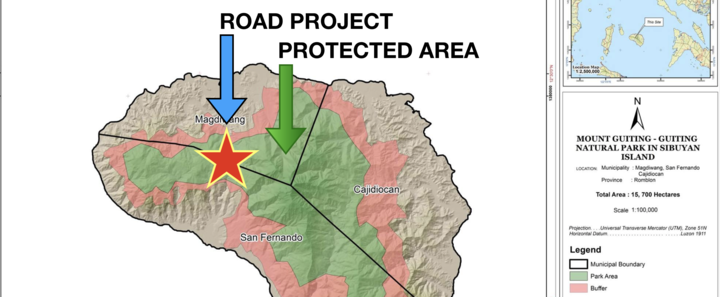 STOP NATIONAL ROAD CONSTRUCTION AT MT. GUITING-GUITING NATURAL PARK (SIBUYAN ISLAND, ROMBLON)Remember that Mt. Guiting-guiting is Sibuyanon’s remaining terrestrial life-support system. If we attempt to destruct its ecological balance without proper scientific and sociological bases under the principles of sustainable development, we will all suffer the consequences. At the heart of Sibuyan Island is the Mt Guiting-Guiting Natural Park (MGGNP). It is the only remaining mountain in the Philippines with relatively intact habitats along its entire elevational gradient. Mt. Guiting-Guiting’s plant and mammal biodiversity is amongst the richest in the world (Heaney and Regalado 1998, Goodman and Ingle 1997, DENR 1997) Be it known that Bayay Sibuyanon and those who seek the stoppage and investigation of this project are not against development but shall continue to promote and adhere to the targets and indicators of Sustainable Development Goals (SDGs). Sustainable development and precautionary principles must always be considered in implementing projects in ecologically sensitive and disaster prone areas. The ‘Priority Sites for Conservation in the Philippines: Key Biodiversity Areas’ document by the Protected Areas and Wildlife Bureau (PAWB), now BMB, of the Department of Environment and Natural Resources (DENR) exposes that there are one critically endangered, four endangered, and eight vulnerable species of biodiversity in Mt. Guiting-guiting Natural Park, which includes the endangered Philippine tube-nosed fruit bat, Nyctimene rabori, and a vulnerable Sibuyan pitcher plant, Nepenthes sibuyanensis. The project is not included in the Mt. Guiting-guiting Natural Park Management Plan. Almost every year, new biological species are being discovered. In 2008, a new species of stick insect has been discovered, the Pharnacia magdiwang. In 2010, a new species of shrew has been documented, Crocidura ninoyi. Gekko coi or Leonard’s Forest Gecko, named after famous taxonomist Leonardo Co, was known in 2011. And in 2012, a new owl species has been found, Ninox hilippensis spilonota; in 2014 a pitcher plant named after a Sibuyanon slain environmentalist Armin Marin, Nepenthes armin. In the same year, a rare endemic species of a tree skink Lipinia vulcania was recorded and a new species of lizard called Pseudogekko isapa sp. The Department of Environment and Natural Resources describes Sibuyan Island having "relatively rich biodiversity": "There are approximately 700 vascular plant species, including 54 species that are endemic to the island. These include Nepenthes sibuyanensis J Nerz (Sibuyan Pitcher Plant); Heterospathe sibuyanensis Becc. (Bil-is), Pinanga sibuyanensis Becc. (Tibañgan), and Orania palindan var. sibuyanensis, a wild palm; Alpinia sibuyanensis, Phyllanthus sibuyanensis, Cyathea sibuyanensis Copel. (Tree Fern); Agamyla sibuyanensis Hilliard & BL Burtt (Sibuyan lipstick plant); Myrmephytum beccarii Elmer (Sibuyan ant plant); Begonia gitingensis Elmer (Guiting-guiting begonia). Of the 700 plant species in the Island, 180 species can only be found in the Philippine archipelago. There are numerous endemic species in Mt. Guiting-Guiting that occupy specific habitats. These are found mostly in primary forest with elevation of 100 meters or higher (Madulid, Domingo, 1997). The endemic species found in the protected area are as follows: • Sararanga philippinensis grows gregariously and form distinct clumps in Peat swamp forest along riverine/riparian forest at low altitudes. • Heterospathe sibuyanensis and Ardisia sibuyanensis located in primary forest at medium altitudes; and • Nepenthes merrillii and Alpinia sibuyanensis most of these are found in primary forest between 100 and higher elevations. A total of 130 species of birds have been recorded in Sibuyan, of which 102 are either known or presumed to be breeding residents. These are: Cinnamon Bittern-Lapay (Ixobrychus cinnamomeus), Celestial Monarch (Hyphothymis coelestis), Striated Grassbird (Megalurus palustris forbesi), Rufous –lored Kingfisher (Halcyon winchelli nesydrionetes), Pygmy Swiftlet (Collocalia troglodytes), and Philippine Hawk-Eagle (Spizaetus philippensis). Sibuyan is also home to nine (9) native non-flying terrestrial mammal species, four (4) of which are endemic rodents (Goodman and Ingle, 1993). This are: Greater Sibuyan forest mouse (Apomys sp. B), Lesser Sibuyan forest mouse (Apomys sp. C), Sibuyan striped shrew-rat (Chrotomys sp. A), and Sibuyan giant moss mouse (Tarsomys sp. A) . Out of nine fruit bat species found in the island, only one (1) species, Sibuyan Pygmy fruit bat (Haplonycteris sp. A) is endemic (Goodman & Ingle, 1993). Dugongs (Dugong dugong) have also been sighted within the municipal waters and dolphins and whales are also expected to be visiting the area. There are nine (9) recorded species of lizards and geckoes two (2) which are classified as endemic and rare. Gekko romblon, the Romblon narrow-disked Gecko, appears to be limited to Tablas and Sibuyan Island."588 of 600 SignaturesCreated by Bayay Sibuyanon Inc. Romblon, Philippines
-
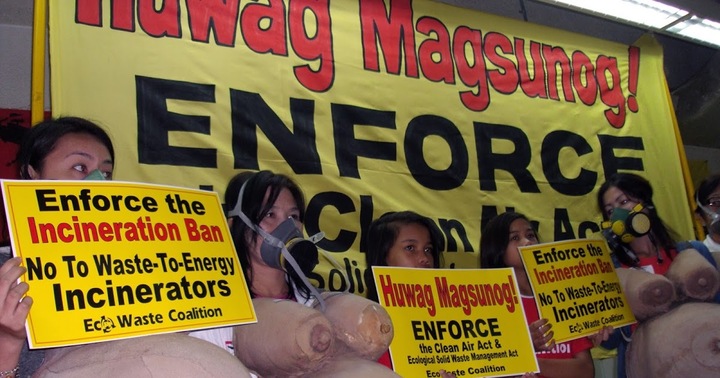 Uphold the Philippine Ban on Waste IncinerationIncineration, including so-called "waste-to-energy" (WTE) incineration facilities (i.e. burning waste to produce electricity), is neither a good way to manage waste nor to produce electricity. In fact, it is proven to be the most expensive, most polluting, most energy intensive and most inefficient way to manage waste and generate electricity: 1. Incineration is a major source of cancerous dioxins and furans, which are regulated under an international treaty, the Stockholm Convention on Persistent Organic Pollutants; and 2. It is also the most expensive way to produce electricity--WTE facilities cost more to construct and operate than coal or nuclear plants. But the government--through Congress and the Department of Environment and Natural Resources (DENR)--are aggressively promoting WTE incineration thinking it will magically solve the country's waste problems. House Bill 2286 seeks to repeal the incineration ban in the Philippine Clean Air Act (RA 8749) and amend the Ecological Solid Waste Management Act (RA 9003) in order to allow the entry of WTE incineration technologies in the Philippines. And the DENR is even paving the way for waste incineration, instead of of doing their duty to protect the environment. The Clean Air Act guarantees every Filipino’s right to breathe clean air and right to a healthy environment. The ban on incineration supports this. Waste incineration aside from being a major source of cancer-causing emissions, also produces particulate matter, which is identified as a leading cause of premature deaths. The bill also undermines the country’s landmark waste law, RA 9003, which calls for an ecological approach to waste management. Incinerators, and WTE incineration facilities threaten human health, pollute our air, land and water, harm our economies, contribute significantly to global warming, and fuel an unsustainable system of consumption and wasting. They have no place in an ecological waste management system, and in today's emerging circular economy. Congress and the DENR must realize that incineration is not a feasible waste treatment option. Instead, they must work toward real solutions and adopt the Zero Waste approach to waste and resource management. This can start with the strict implementation of RA 9003 which does not only save money, but also creates jobs, improves public health and mitigates climate change.139 of 200 SignaturesCreated by No Burn Pilipinas Alliance
 -
 Peoples Petition for Sustainable and Ecological Food System in the Philippines.We are experiencing a food emergency with hunger in the Philippines categorized as a “serious problem” in the 2015 Global Hunger Index. In the past 15 years (1999-2014), the number of Filipino families who rated themselves as hungry rose from 8.3% to 18.3% based on the Social Weather Station’s (SWS) self-rated hunger survey. The SWS survey also revealed that 13.4% of families suffer from involuntary hunger in 2015. The victims of hunger are mainly children and women with where 20% of children below 5 years old are underweight, 30% are underheight, and 8% are wasted; while 31% of adults 20 years old and above are overweight or obese mainly due to increasing consumption of unhealthy food. There is minimal support for building on-farm biodiversity and promoting access to diverse diets to address nutrition security and build farm resilience against the impacts of climate change. Our farms, especially those under industrial production, depletes our soils and poisons our water and air with extensive use of chemical fertilizers and pesticides. Ironically endangering the very environment that supports food production. Our trade rules and incentive measures favor more corporate food production, whereas more than 80% of our food is still produced by small holder Filipino farmers, who remain poor, hungry and malnourished. While the Philippine Constitution and laws is replete with provisions on food security, there is an urgent need for greater coherence, convergence and synergy on the various programs of government on food which are presently governed under different departments and agencies. Our Constitution explicitly statesd that the State shall defend the right of children to assistance, including proper care and nutrition. We have yet to realize this Constitutional rights owing to a lack of policy framework that advances the right of peoples to healthy and culturally appropriate food produced through ecologically sound and sustainable methods, and the Filipinos’ right to define our own food and agriculture systems. The essence of food security and sovereignty is the total and full development of every Filipino living a life with dignity. Join us! Together, let us advance as sustainable/ecological food system for all Filipinos.209 of 300 SignaturesCreated by Peoples Food Movement
 -
 Everybody has a Right to Compassionate, Plant-based/Vegan Food, Give us Access to it!There is a growing number of people all over the world, and in the Philippines who are shifting to a vegan diet and lifestyle. It is a conscious choice to show love and respect for animals and Mother Earth, and to care for one's own health and well-being. People like these should not be marginalized by having practically nothing to choose from in school, office, and hospital canteens, restaurants, hotels, and other food establishments. There are a number of vegan groups on Facebook in the Philippines, such as Vegan Philippines, Manila Vegans, Vegans of Manila, among many others. These are proof that there is a growing interest in a vegan diet in the country. The members of these groups are vegans, transitioning, or vegan-curious. Aside from the people who are in vegan groups, there are countless others who prefer healthier, more ethical, and more environment-friendly food choices. There are so many reasons why a vegan diet is becoming the food choice of many: 1. COVID-19 is one of the many zoonotic diseases that have caused a lot of death and suffering in the Philippines and the rest of the world. There are also other emerging diseases from animals that could cause another pandemic such as various strains of the swine flu virus and the bubonic plague. There is no better time than now to support and promote plant-based/vegan food in the country to build health and immunity, and to prevent another pandemic from emerging. 2. Compassionate/Vegan food is an ethical choice as it does not use any animal ingredients that cause needless suffering and death to animals. Animals are sentient beings that should not suffer and die for people's taste buds. Everyone could thrive on a balanced vegan diet. There is no need to kill animals for food. See the documentary Earthlings for more information. 3. Vegan food is better for the climate. With worsening climate change, shifting to vegan food drastically reduces one's carbon footprint. A meat-based diet has been found to generate more carbon pollution than the entire transport sector. An Oxford University study found that meat-based diets result in 7.2 kg carbon emissions a day, while only 2.9 kg for a vegan diet. Recently, the DENR started promoting a plant-based to help address climate change. Also, see the documentary Cowspiracy for a better understanding of this. 4. Vegan food is kinder to Mother Earth. With the antibiotic-laden animal waste being generated by the poultry and livestock industry, so much soil and water are being polluted every single day. Livestock is fed with corn, soybeans, and grains, which require a huge amount of fertilizers and pesticides. There is also an inefficient conversion of calories of crops for food converted to animal feeds. More people would be fed by directly using grains for food than if they were converted to animal feeds. 5. Vegan food is healthier. Whole foods, fresh fruits, and vegetables are more alkaline and thus prevent many types of illnesses. Studies have shown that blood from vegans fight off cancer cells. There are also numerous studies showing vegans have a lower risk of cancer, as well as lower rates of diet-related diseases such as obesity, diabetes, and hypertension. Canada has revised their dietary guidelines with much emphasis on plant-based food. For more information on health benefits of a plant-based diet, see the documentary What the Health. People who make an effort to make conscious choices for animals, for their health, and for the planet should be provided access to these kinds of food. By providing compassionate food choices, it could also make businesses thrive. Owners of vegan restaurants and shops claim most of their customers are not even vegan but vegan-curious, who are more than happy to try healthier, more earth-friendly, and ethical food choices. This means that given alternatives, more people would start to choose better. Even non-vegans deserve to have a choice when they want to try healthier, more ethical alternatives. Vegans would like to alleviate the needless suffering and death of animals and in the process also protect the earth, the climate, and themselves. Why should hotels, restaurants, canteens, and grocers not provide vegan choices to them? In fact, everybody should have access to vegan food. The future is vegan, let us create it now by supporting and promoting vegan food.430 of 500 SignaturesCreated by Shiela R Castillo
-
 CLSU: A Smoke-free CampusIn line with the University President’s declaration of our university being a smoke-free campus, we are asking you, us, students to please help us in our signature campaign for our president to have this campaign as a concrete basis in including vape or e-cigarettes in the prohibited smoking paraphernalia.225 of 300 SignaturesCreated by Trevor Fielding
-
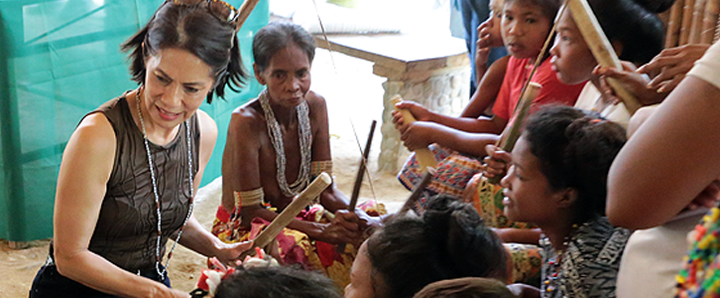 Reappoint Gina Lopez as DENR SecretaryGina Lopez has been the only DENR secretary that has enforced our environmental laws without fear or hesitation. She has extensively visited and documented the environmental degradation of mine sites, watersheds, coastal areas, and forests, all over the country. She has comprehensively sought, listened and decisively acted on the complaints of affected communities. She is qualified to this position considering her knowledge of environmental issues and her previous experience managing development initiatives such as social enterprises, eco-tourism and the rehabilitation of the Pasig River. To ensure the continued advance for real change in your administration, Gina Lopez is imperative because: a) She can inspire people within the agency and the communities to commit towards a green economy; b) She has a solid history of being able to work with other government agencies local governments, and private sector and civil society groups to implement an integrated area development approach that is crucial to helping the poor; c) She can check and possibly end corruption in the DENR, as she herself has shown that she has zero tolerance for corruption; d) She can effectively communicate the environmental challenges we face, and inspire millions of citizens to address the issues they face at ground level. We realize that as President, you have to make choices and follow the law. But in the case of Gina Lopez, you yourself correctly recognized that powerful economic interests and corrupt politicians have obstructed your resolve to bring change to DENR. We must not allow this betrayal of the country, and the betrayal of our environment to remain unchecked. Mr. President, millions of Filipinos – especially the poor – are relying on your will to make the right decision. It is in this spirit that we, along with many of our fellow Filipino citizens, ask that Gina Lopez be re-appointed as DENR secretary.490 of 500 SignaturesCreated by Reappoint Gina Lopez as DENR Secretary Movement
-
 Let Love Win.Love doesn't win all the time. Many members of the LGBT+ community still get discriminated by surrounding people who do not share or support beliefs of equality for all. Sometimes, even by the people they thought would understand the most. We cannot always avoid the cruel derogatory names, the shaming, the isolation, the glares, the backhanded comments and the harsh treatment. Still, we endure. But we can only endure so much. Sometimes, the abuse becomes clearer, the bruises bluer and eyes more swollen from sleepless nights spent crying. Sometimes these things happen within our very own homes. Love doesn't win all the time. But by signing into this petition, you agree that the abuse should stop, for once. That love should win, for once. Raise awareness for homophobia within family and social circles. Let them know that you know they're doing it wrong. Let them know you care. And thank you, on behalf of the LGBT community.9 of 100 SignaturesCreated by Raine Canlas
 -
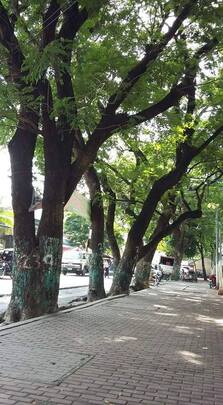 STOP CUTTING THE 248 OLD TREES IN FLORIDABLANCA, PAMPANGAThis is important because the trees are a part of our hometown and of our families. Many of us have good memories with these trees. People were not consulted with the tree cutting which was supposed to be done by the LGU before implementing a project.We all know how long it takes for a strong tree to grow. These trees served as our protection against pollution, floods and from the scorching heat of the sun. They have served us well from generation to generation and it is time for us to protect them. As of yesterday, the DENR issued a temporary stop to the cutting of the trees. What we are asking is for a PERMANENT STOP to the cutting of the old trees.640 of 800 SignaturesCreated by Karen Manalansan
 -
 Ban disposable bottles from school canteensTen reasons why we should ban the sale of disposable plastic bottles in schools: 1. Less Waste. Less than 10% of all plastic waste generated is being recycled. The volume of plastic bottles being generated in school canteens is much too big and not all are being recycled. It doesn't make sense to continue generating this waste. 2. Safer Drinking Water. There is no assurance that water or drinks from disposable bottles are safe to drink. Many bottled water companies do not subscribe to safety standards and water quality is not much better than tap. 3. More expensive than fuel. Bottled water and sugared beverages are much too expensive, especially for students. At most times, bottled water is more expensive that soft drinks and chemical-laden sugared drinks in tetra packs. Water refilling is more allowance-friendly. Students are encouraged to drink more water if they don't have to spend too much to buy it. 4. Better access. While mineral water and bottled beverages can only be sold at school canteens, water refilling stations can be placed strategically all over schools, encouraging students to drink water more. 5. Better health. Water refilling stations provide better access to safe, affordable drinking water. Students drinking more water promote over-all better health for the school community. 6. Water miles. If we are worried about food miles, shouldn't we be also worried more about water miles? Why drink water that came from so far away, water that is bottled months, or even years ago? Transporting these drinks entail a lot of carbon footprint. Be mindful of climate change and the water miles of bottled water. 7. Making the government accountable. Just because we can buy bottled water to drink, it doesn't mean that the government is off the hook in its responsibility to provide safe drinking water for all. Promoting bottled water is allowing the transfer of responsibility to provide clean drinking water from government to the business sector. Water is a right. It should be drinkable from the tap. The government should provide it. 8. Better behavior. Hyper-activity and restlessness among children have been found to be linked to excessive sugar intake. Sugared drinks in disposable bottles are some of the culprits. By eliminating access to such drinks in schools, students can be more sober and calm and thus be in better behavior. 9. Promote healthier options in school canteens. Instead of factory-made drinks, fresh and healthy fruit and herbal drinks should be prepared in schools. 10. Generate more income. More income can be generated if water refilling stations are placed strategically all over schools. Its a win-win situation where the school still gets to earn a income from refilling stations and students get access to safe and cheaper water. Matching schools with local farmers in providing healthy, natural, and organic drinks could also generate local income rather than have the income concentrated only in big companies that bottle water and manufacture chemical and sugar-laden bottled drinks.288 of 300 SignaturesCreated by Shiela R Castillo
-
#StopShippingPlasticWaste**#DidYouKnow** Many products are packaged in ‘recyclable’ plastic material that is not recyclable at all. ‘Recyclable’ plastic waste, usually mixed with a significant share of contaminants, has been shipped for years from rich economies to weaker economies. But often, the recycling of exported plastic waste is a MYTH! Check out this video from Greenpeace Malaysia to know more about the Recycling Myth: https://youtu.be/yw-sZ2Asa8U https://www.greenpeace.org/static/planet4-philippines-stateless/2022/06/b46d0de0-stopshippingplasticwaste-2.png - **The plastic waste trade is a source of ocean pollution.** An estimated 80% of marine debris stems from plastic[1], which includes consumer products and packaging, and domestic waste. A portion of that volume comes from plastic waste that had been shipped for recycling. Researchers estimated that up to 31% of polyethylene (PE) plastic waste exported from Europe is not recycled at all[2], with as much as 24% of the rejected plastic potentially ending up as marine pollution. - **Plastic waste exports drive plastic production.** When countries ship their plastic waste to other countries under the guise of ‘recycling’ - corporations can continue to manufacture plastics[3] with impunity. If countries were forced to deal with their own plastic waste, they might be more wary of producing massive quantities of plastics that will persist in their environments for centuries. - **Plastic waste exports unjustly impacts the environment and communities in the Global South.** Due to pollution crimes[4] such as the illegal trafficking, dumping, and burning of plastic waste, the plastic waste trade often has **severe implications for the health of the environment and the people in destination countries,** causing the toxic pollution of soil, air, and water from waste that they did not create. - **Plastic waste exportation is equivalent to waste colonialism.** By shipping plastic waste, rich countries can enjoy convenience and unlimited consumption while shifting the blame and the responsibility of tackling plastic pollution onto developing countries - most of which are ill-equipped in terms of infrastructure and technology to handle their own domestic plastic waste. The traded plastic waste ‘leaks’ into rivers and the ocean at every stage of the transportation process, even during storage and recycling. - **The plastic waste trade is a false solution. #PlugtheLeak** Strategies to stop plastic litter and microplastics from leaking into the oceans, including increased recycling, will be ineffective if plastic waste continues to be transported to other countries, while plastic production and consumption keep increasing. https://www.greenpeace.org/static/planet4-philippines-stateless/2022/06/f9309fcf-stopshippingplasticwaste-4.png The real solution requires changing the practice of disposing of plastic waste via exports. Shipping companies must stop transporting plastic waste from rich to weaker economies. This safeguards communities in receiving countries from unjust waste trade practices, and protects our environment from plastic pollution. Doing so would better align shipping companies with their sustainability commitments, especially those in line with SDG 14’s targets to reduce marine pollution and protect marine ecosystems. To **#PlugtheLeak** in river and ocean pollution, we have to **#StopShippingPlasticWaste!** https://www.greenpeace.org/static/planet4-philippines-stateless/2022/06/2929d7fe-stopshippingplasticwaste-3.png Companies like Maersk offer excuses for why they will not stop shipping plastic waste[5], yet we know that this shift is possible! From 1 June 2022 onwards, the French shipping company CMA CGM will no longer carry plastic waste on board its ships[6]. Here’s why CMA CGM decided to stop plastic waste trade: https://youtu.be/5XIvRdeVgQo This was after the Shipping Lines Campaign asked the company to rethink their waste trade policy — demonstrating that concerted efforts targeted at shipping companies, like this petition, do work! **Tell the world’s top shipping companies — Maersk (Denmark), Hapag-Lloyd (Germany), MSC (Switzerland), Hamburg Sud (Germany), COSCO (China), Orient Shipping (Jordan), and Dole Ocean Cargo (United States) — to #StopShippingPlasticWaste.** If you are located in Denmark you may also sign Plastic Change's petition calling on Danish company Maersk here: https://plasticchange.dk/maersk/ To know more about waste trade, head over to Break Free from Plastic’s page: https://www.breakfreefromplastic.org/waste-trade/ Petition supported by: https://www.greenpeace.org/static/planet4-philippines-stateless/2023/05/bc066f28-collaborating-organizations-e1683710980592.png **Reading Resources** Follow the progress of the Shipping Lines Campaign here: https://www.ban.org/plastic-waste-transparency-project-hub/shipping-lines-campaign [1] Marine Plastic Pollution - IUCN (Nov 2021) | https://www.iucn.org/resources/issues-briefs/marine-plastic-pollution [2] Recycling of European plastic is a pathway for plastic debris in the ocean - Environment International (Sep 2020) | https://doi.org/10.1016/j.envint.2020.105893 [3] The truth behind trash - Environmental Investigation Agency | https://eia-international.org/wp-content/uploads/EIA-The-Truth-Behind-Trash-FINAL.pdf [4] Pollution Crime - INTERPOL | https://www.interpol.int/en/Crimes/Environmental-crime/Pollution-crime [5] Maersk on why they won’t stop plastic waste trade | https://www.tj-chinafreight.com/maersk-bars-on-cma-cgm-we-oppose-stopping-plastic-waste/ [6] Plastic ban onboard CMA-CGM ships | https://www.cma-cgm.com/news/4064/plastic-ban-onboard-our-ships [7] TRASHED – A Briefing Paper on Plastic Waste Trade in Asia Pacific https://www.breakfreefromplastic.org/wp-content/uploads/2022/06/PlasticWasteTrade_BriefingPaper_Final_min.pdf698 of 800 SignaturesCreated by Greenpeace Philippines